
Featured / Between Sessions
Making Money Off Your Music
A practical guide to earning from live shows, merchandise, sync licensing, partnerships, and the skills surrounding independent music.
August 11, 2026 / 9 minute read

People like to paint making money from music as this cursed pursuit—something that only exists in dreams. The grind of being a rising artist has always been portrayed as an uphill battle in every respect, and finances are no exception. Is that to say it isn't achievable?
No. But it's not for the faint of heart, that's for sure.
I think the most stressful part is operating without some kind of manager. Unless you know someone who's very generous with their time, paying someone to manage you is more of a wish-list item for smaller acts. That said, performance-based incentives like, "If you make me x amount on merch, you can take y percent," can be a good place to start.
But that's aiming high. And the reason I say it's stressful is because you already have so much to stay on top of with your music, marketing, and everything else. Making revenue—specifically enough to support your work—requires so much thought that, for many, it's merely out of the question. Instead, a breakthrough viral track becomes the only Hail Mary they believe could land them a worthwhile check.
Well, again, that doesn't really need to be the case.
If you (or your band) are in the market to start building income from your work, you need to have the groundwork laid before you can start prioritizing what makes the most sense. Traditionally, the main revenue streams boil down to live performances, merchandise, sync licensing, partnerships, and content. Depending on how you approach making music, you may also have skills that open additional opportunities like instrument lessons, production work, or mixing and mastering services.
Everything I listed can be done as one person. It really comes down to how badly you want it. That said, I will reiterate that having someone serving in a management role—even if it's delegated to a fellow band member—can make the workload much more manageable.
Let's consider this a makeshift how-to and allow me to guide you (to the best of my novice abilities) through these recommendations, starting with the live scene.
No matter what your situation is, there's a very good chance a live music culture exists around you, whether it's on your radar or not. I've grown up in a small New Hampshire town that falls somewhere on the edge of "rural." I have one friend who's deeply involved in the local death metal scene and another who drives an hour to Boston to rap with a collective at close-knit gatherings. Last night, my friend's parents were telling me about the Alice in Chains cover band they were seeing.
Point is, whether it's where you live or just outside of it, people want to see live music. That isn't a location-specific need—it's a very human one.
Like many things involving a career in music, this takes time to become profitable. If you don't already have a genuine desire to perform simply because you enjoy it, try to tap into one. For many of your first shows, the objective is simply landing a venue and putting on a performance people remember.
That begins the domino effect that eventually allows you to charge for tickets, negotiate guarantees, earn a percentage of ticket sales, or start receiving paid offers elsewhere. But as I said, this is the long haul. It's best to approach live performance for what it is at its core: an active display of your musicianship.
Live music is the classic example of earning money as an artist. It's also inconsistent, takes years to understand, and generally shouldn't be viewed as your primary income source unless you've reached the point where you're regularly playing larger city venues or touring.
So let's talk about something that's often much more scalable: merchandise.
Merch is great because it helps build identity, advertise your project, and gives your work a more established feel.
It can be tricky for a few reasons, though.
First, you need to find a vendor. Thankfully, that's easier than ever. There are countless companies built specifically for musicians and creators. The challenge isn't finding one—it's finding the right one.
I'd strongly encourage you to prioritize quality control. Research what customers have to say about their products, compare pricing, look into the materials they use, and understand where they're sourced. It feels overwhelming at first, but once you've settled on a vendor, you've done the hardest part. It's a great feeling knowing you've already made thoughtful decisions financially and ethically before you ever sell your first shirt.
Designing is an artistic choice.
I'll have an article coming out at some point in the future (God knows when) about the importance of having an artistic identity. Every influential artist has a presence that's recognized well beyond the music they make. Going into the design process with that identity already established makes reaching an appealing final product much easier.
As always, my advice is to strike a healthy balance between self-awareness and authenticity. Make something people will actually wear, but don't force something that doesn't represent you.
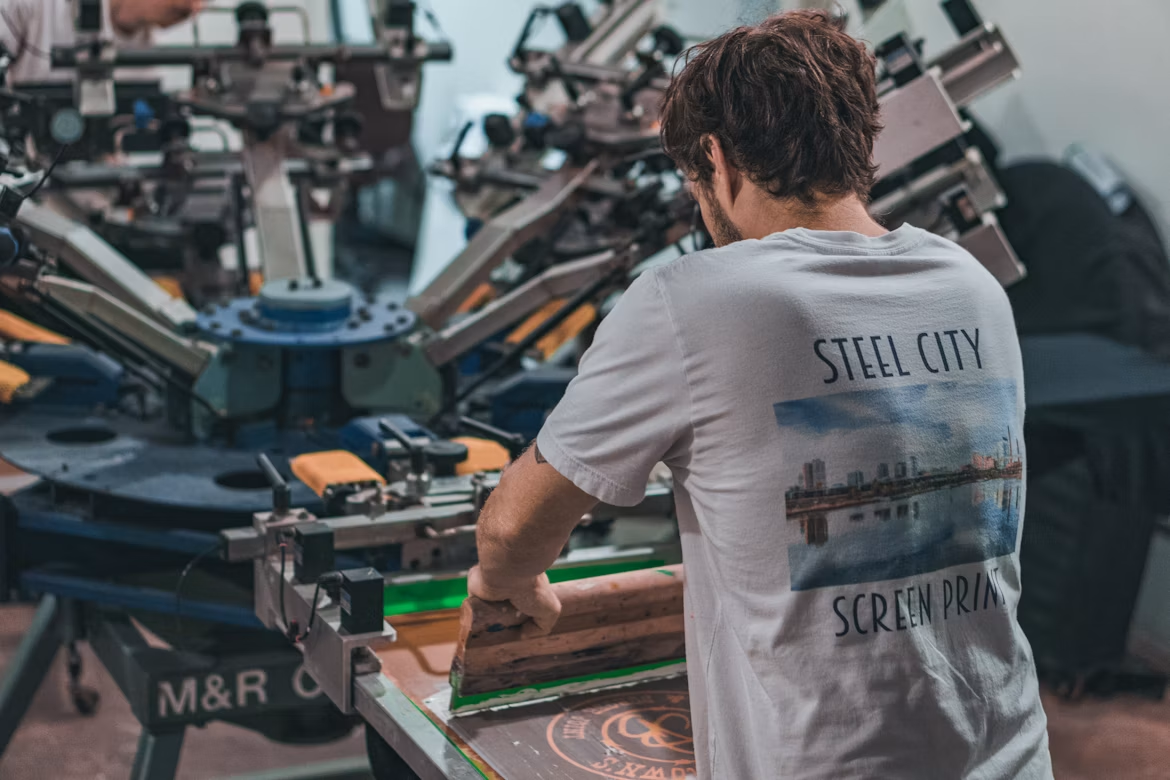
If it wasn't obvious already, though, there's another important question:
Can I actually sell the merch I'm making?
Well, in the literal sense, yes—you need somewhere to sell it.
Maybe that's online. Maybe it's at your shows. Maybe you already have a storefront. The world's your oyster.
You could absolutely post a mock-up on social media, have people Venmo you, and ship everything yourself. Plenty of artists start that way. Just keep in mind that, as sales grow, you'll want a more organized system for processing payments, tracking orders, and staying on top of your business records.
If you've built enough of an audience, setting up a simple online store becomes worthwhile. All you really need is a place where people can browse products, add them to a cart, check out securely, and have orders either forwarded to your fulfillment partner or handled manually if your volume is still small.
If all of that sounds daunting, it really shouldn't. To keep costs down, you can build a perfectly respectable storefront yourself in just a few days using a drag-and-drop website builder like Wix or another beginner-friendly platform. I don't like AI being used in the artistic side of music in the slightest, but I can't deny how useful it can be for the operational side of things if you want to make a site.
As for payment processing, there are plenty of good options. Find one that fits your bank, your business, and the way you expect people to buy. Just remember they'll usually take a small processing fee.
And don't lose sleep over your domain name early on. If most people are finding you through social media anyway, spending a fortune on the perfect domain usually isn't where your money is best invested.
I'd also place a huge emphasis on advertising your merch within your community first. Those are the people most likely to proudly represent your work early on. Don't rush into building some massive online storefront if you don't yet have the audience to support it. Embrace the people around you first and let that success snowball outward.
Going down the list, the remaining revenue streams don't need quite as much explanation.
Sync licensing is absolutely worth exploring. If your music fits the needs of a film, television show, advertisement, video game, or creator, you may be able to license it for use and earn licensing fees—and in some cases, additional royalties. Some styles naturally receive more licensing opportunities than others, but it's an avenue that's worth keeping in the back of your mind.
Partnerships and content often go hand in hand.
Prioritize your content as something you use to express yourself rather than treating it purely as an advertising machine. You'll find it much easier to stay consistent, and your audience will usually recognize when you're being genuine.
Platform monetization itself tends to pay very little for quite a while. It often takes several viral moments before those earnings become meaningful. That's where partnerships start becoming much more valuable. Once you've built an audience in the tens of thousands, companies become far more interested in paying to reach the people already paying attention to you.
Assess your own brand and don't be afraid to reach out to companies that genuinely align with it. Maybe that's a clothing company, a recording gear manufacturer, or even your local instrument shop.
The worst they can say is no.
You can also keep an eye on local events looking for opportunities to represent your work while earning a little extra money. Browse community Facebook groups, town pages, and local event listings to see what's happening around you.
Maybe you don't get paid.
But free marketing never hurts.
I think the biggest shift you need to make as a musician, though, is recognizing that this shouldn't be a pursuit driven solely by money. It's good to dream big, and you should never let anyone convince you success is impossible. But in today's competitive creative landscape, your motivation needs to be rooted almost entirely in passion if you want to stick with it long enough to succeed.
Be strategic. Advocate for yourself. Chase opportunities.
But always remember the timeless philosophy behind being an artist: the goal is to leave something behind that genuinely touches people's lives—not simply to put money in your pocket.
Read Next
Newsletter
Like this kind of thing?
Join the monthly Soft Static email for a quick recap of new pieces and the music still bouncing around our heads.