
Between Sessions
My Bias for Loop-Based Music
A short argument for loop-based music, intentional repetition, and the strange confidence it takes to let one great musical idea breathe.
July 14, 2026 / 4 minute read
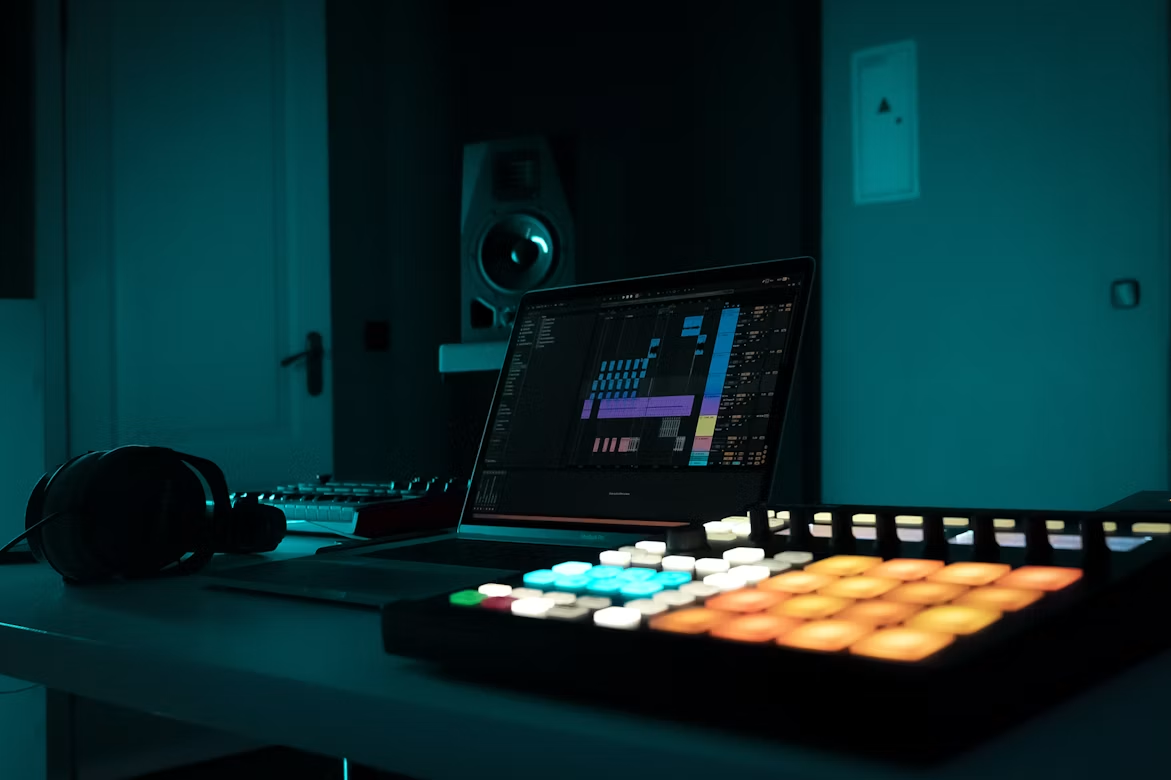
I don't have a roundabout way of introducing this one. I just want to rant.
I love loop-based music. I don't think anyone is going to get their britches in a twist over that statement alone, but I do think there's a negative, lazy connotation surrounding the concept, especially among other musicians.
If you follow my Instagram, you probably saw my excitement over The Garden's newest album, Bootleg. After sitting with it for a few days, the standout track for me was easily the genre-blending experience that is "The Kockroach".
I say genre-blending because Fletcher Shears interrupts the song with politically charged electronic mayhem that breaks up the bulk of the track. Outside of those moments, though, and the occasional divergence elsewhere, the song spends most of its runtime revolving around one incredibly catchy loop.
That's exactly what made me fall in love with it.
For a lot of people, the issue is the idea that capturing one great musical idea and riding it for most of a song is lazy, somehow diminishing the authenticity of traditional musicianship.
I disagree.
I think music is far more about how it affects the emotional parts of our brain than the logical ones.
Players like Mark Knopfler and Jimi Hendrix set a standard that the greatest musicians were the ones who understood their instruments better than anyone else. I'm not saying that isn't true, but I do think there's more nuance now than there used to be.
With modern production tools available to virtually everyone, a song's diversity doesn't have to come from one instrument constantly changing. It can come from evolving vocal melodies, subtle production flourishes, thoughtful mixing decisions, and the way different layers enter and leave the arrangement.
Think about some of indie's defining artists over the past decade. My mind immediately goes to Current Joys. While Nick Rattigan's later work branched out, albums like Wild Heart thrive on repetition. Why does it work so well? Because the loops themselves are worth hearing again.
"The Kockroach" isn't necessarily a song that's going to appeal to everyone. Between the chopped samples, gritty vocals, strange delays, and electronic breakdowns, it's unmistakably The Garden. But beneath all that chaos is a central loop that's simply infectious. I've realized that's a pattern across so many of my favorite songs. That approach works best when it's built upon rather than simply repeated. That's what separates intentional minimalism from laziness.
I've mentioned Vampire Weekend's "Diplomat's Son" before as one of my favorite songs ever made. Despite stretching past six minutes, it's built around essentially the same bass progression for what feels like at least two-thirds of the track. It never gets old. The percussion subtly evolves. Samples weave in and out. Piano, strings, vocal layers, and panning gradually fill the space until the song feels completely transformed, despite never abandoning its core idea.
But looping back around (see what I did there), that's exactly why it works. The song finds something beautiful, recognizes it, and refuses to let it go too soon. It's a delicate balance.
Sometimes I'll hear a section of a song and think, I wish that lasted the whole track. Then I'll find one of those YouTube videos that's just "the best part of ______ looped for an hour," only to realize that the original worked because it knew when to end. Part of what makes a great musical moment memorable is that it leaves before it overstays its welcome.
My opinion isn't yours, nor should it be. I just wanted to talk about loop-based music because I've realized how often it ends up being one of the defining qualities in the songs I love most. It's even started to shape the way I write music myself.
What I do hope people reconsider is the idea that minimalism somehow makes someone less of a musician. Whether that's restrained recording techniques, sparse arrangements, or looping itself, every musical tool is valid when it's used intentionally.
I think the mindset that more is always more is slowly disappearing. We're at a point where being a virtuoso on an instrument alone isn't enough to make an artist stand out anymore. Ironically, that makes looping seem even less impressive on paper because it often requires fewer moving parts.
Sure.
But I don't think we celebrate the skill it takes to recognize when you've already found the strongest idea in the room. Sometimes mastery isn't about writing ten different parts.
Sometimes it's about having the confidence to let one great idea breathe.
Read Next


Newsletter
Like this kind of thing?
Join the monthly Soft Static email for a quick recap of new pieces and the music still bouncing around our heads.